
Does Ohio Medicaid Cover Therapy for Children? What Parents Need to Know

Yes. Ohio Medicaid covers outpatient counseling for children, and for a child under 21 it is one of the most complete mental health benefits available in the state — more complete, in several respects, than most commercial plans.
That surprises a lot of parents. The assumption runs the other way: that Medicaid is the coverage you settle for and private insurance is the coverage you want. For children’s therapy in Ohio, the evidence points the other direction.
If you are still at the stage of wondering whether your child needs therapy at all, start with the signs worth watching for at each age and come back to the coverage question afterwards.
Here is what is actually covered, what it costs, and what to do next.
Key Takeaways
- Children under 21 on Medicaid have a broader legal entitlement than adults do, under the federal benefit Ohio calls Healthchek.
- Federal rules bar a fixed session cap that can never be exceeded for a child under 21. Coverage runs on medical necessity, not on a number.
- Children under 21 are exempt from Ohio Medicaid copayments, and outpatient behavioral health is not a service Ohio charges copays for in the first place.
- You do not need a referral from your pediatrician to start outpatient counseling in Ohio.
- The single biggest barrier Ohio parents report is not cost and not coverage — it is finding a provider who takes their particular plan, cited by 48% (Health Policy Institute of Ohio, June 2026).
What Ohio Medicaid covers for a child’s therapy
Outpatient mental health counseling is a covered benefit for Ohio Medicaid members of every age. For members under 21 it sits inside a broader federal entitlement called EPSDT — Early and Periodic Screening, Diagnostic and Treatment — which Ohio administers under the name Healthchek.
The distinction matters more than the acronym suggests. Under EPSDT, Medicaid-enrolled children are entitled to coverage of services that are medically necessary to “correct or ameliorate” physical and mental illnesses and conditions, and states are specifically required to include mental health in the screenings they provide and to cover diagnosis and treatment of what those screenings find (Centers for Medicare & Medicaid Services, February 2026).
In practice, for a family starting weekly counseling, the covered services include:
- Diagnostic evaluation and assessment
- Individual psychotherapy, in 30, 45 and 60-minute sessions
- Family psychotherapy, with or without the child present
- Group psychotherapy
- Crisis psychotherapy
That list comes from Ohio Administrative Code 5160-8-05, the rule covering behavioral health services delivered by licensed professionals in private practice, including those practising under clinical supervision. It is worth knowing that Ohio has two separate behavioral health rule tracks: one for community agencies certified by OhioMHAS, and this one for licensed professionals in private practice. Guidance written for the first track does not always describe the second accurately, which is a common source of confusion.
For younger children, much of that individual psychotherapy happens through play and art rather than conversation. That is a covered service like any other — the billing code is the same.
How many sessions does Medicaid cover?
There is no fixed number, and that is a deliberate feature of the law rather than a gap in it.
CMS is explicit that medical necessity criteria “cannot have the effect of imposing a limit on the amount, duration, or scope of services that can never be exceeded for EPSDT-eligible children,” nor can those criteria be arbitrary (CMS, February 2026). Where prior authorization applies, it has to be decided case by case on the individual child’s needs, and it must not delay treatment the child needs. Managed care plans are bound by the same standard — a plan’s definition of medical necessity cannot be more restrictive than the state’s.
The accurate way to hold this: therapy continues as long as it is clinically warranted, and no one can point to a session number and say the benefit has run out. It is not accurate to describe this as unlimited sessions. Ohio’s rule does set limits on some adjacent services — one diagnostic evaluation per provider per calendar year, and annual hour caps on psychological and neuropsychological testing — which may be exceeded with prior authorization. Those are evaluation and testing limits, not psychotherapy limits.
If a request is denied, that decision can be appealed through a Medicaid state fair hearing. Few parents know this, and it is worth knowing.
What does it cost?
For a child under 21 on Ohio Medicaid, outpatient counseling should cost the family nothing.
Ohio’s copayment rule (Ohio Administrative Code 5160-1-09) excludes “children and youth under the age of twenty-one” from Medicaid copayments entirely, and separately, outpatient behavioral health is not among the service categories Ohio applies copays to at all. The rule also states plainly that no provider may deny services to someone eligible for them because they cannot pay a copay.
Set that against what the same hour costs other Ohio families.
The gap is the entire argument. A family paying out of pocket in Ohio averages $164 for a 60-minute session; a commercially insured family pays $28 in network and $55 out of network (Milliman data via the Health Policy Institute of Ohio, June 2026). At weekly sessions, the difference between in-network commercial coverage and no coverage is roughly $7,000 over a year.
The barrier is not coverage. It is finding someone who takes your plan.
This is the part worth internalizing, because it changes what you should actually spend your energy on.
When Ohio parents of children with unmet mental health needs were asked why, the most common answer was not cost and not a lack of coverage. It was that providers did not accept their insurance.
Nearly half of Ohio children — 45% — are covered by Medicaid, almost exactly matching the 46% on commercial plans (Health Policy Institute of Ohio, June 2026). Medicaid is not a minority situation in this state. It is half of all children.
And the reason many private practices do not accept it is less obvious than it looks. Ohio reimburses behavioral health clinicians an average of 18% less than medical or surgical clinicians (Health Policy Institute of Ohio, June 2026) — but commercial insurance reimbursement rates in Ohio are generally lower than Ohio Medicaid rates. The common assumption that Medicaid is the worst payer does not hold here.
Workforce scarcity compounds it. Ohio has 138 designated mental health professional shortage areas covering roughly 5.4 million residents, and would need about 240 more practitioners to clear those designations (HRSA, data as of 30 September 2026). Ohio meets 34% of its assessed need, which is actually better than the national figure of 26% — but a third of the need met is still a third.
Do I need a diagnosis or a referral first?
You do not need a referral. Outpatient psychotherapy under that rule does not require a physician referral in Ohio, and Ohio’s managed care plans say the same in their own member materials. Your pediatrician’s input is useful, particularly for ruling out medical causes of physical symptoms, but it is not a gate you have to pass through.
On diagnosis, be careful of what you read elsewhere. A claim circulating widely is that no diagnosis is ever needed for a child’s therapy under EPSDT. That overstates things. CMS does encourage states to consider covering services for children without a diagnosed condition, but it is an option offered to states rather than a universal rule, and the states CMS names as having adopted it do not include Ohio.
What is true, and more useful: you do not need to arrive with a diagnosis. A diagnosis is generally part of how ongoing therapy gets billed in Ohio, but establishing one is the therapist’s job, worked out with you over the early sessions. It is not your homework, and not having one is no barrier to making the first call.
Which Ohio Medicaid plans cover children’s counseling?
All of them. Ohio’s Next Generation managed care plans — CareSource, Buckeye Health Plan, Molina Healthcare, AmeriHealth Caritas, Anthem Blue Cross and Blue Shield, Humana Healthy Horizons, and UnitedHealthcare Community Plan — each cover outpatient behavioral health including assessment, individual, family and group psychotherapy. This is a state-required benefit, not something plans compete on.
What actually varies between plans is the provider network and, for some services, prior authorization. That is the distinction that trips families up: a practice can accept “Ohio Medicaid” and still not be contracted with your particular managed care plan. In managed care, the plan pays in full only for providers who have contracted with that specific plan.
So the question to ask a practice is never “do you take Medicaid?” It is “are you in network with my plan?” A practice that takes some plans and not others is normal, not evasive — and it is why the answer has to come from them rather than from a directory.
There is also a separate track worth knowing exists without worrying about it. OhioRISE is a specialized plan, administered by Aetna Better Health of Ohio, for young people with complex, multi-system behavioral health needs, with eligibility determined by an assessment called the CANS. A child starting weekly outpatient counseling is generally not an OhioRISE case. If your child’s needs are more intensive, your plan or a behavioral health provider can request that assessment.
What to actually do next
- Find out which plan you have. It is on your member ID card — you will have two cards, the state Medicaid card and your managed care plan’s card. If you are unsure, the Ohio Medicaid Consumer Hotline is 800-324-8680, Monday to Friday 7am–8pm and Saturday 8am–5pm, with interpreters available.
- Check coverage before the first appointment. Call the behavioral health or member services number on the back of your plan card, or the state hotline above.
- Call practices and ask the right question. Not “do you take Medicaid” but “are you in network with my specific plan, and are you taking new child clients?”
- Ask what the first appointment involves. Practices differ. At many, the first session is about getting to know your child and gathering background rather than starting treatment straight away.
- Ask what it will cost you. For a child under 21 the expected answer is nothing.
Five questions worth asking when you call
- “Are you in network with [my plan name] — not just Ohio Medicaid?”
- “Are you taking new clients in my child’s age range?”
- “What happens at the first appointment?”
- “Will there be any cost to me?”
- “Do you need anything from our pediatrician before we start?”
Frequently asked questions
Does Ohio Medicaid cover therapy for a child without a mental health diagnosis?
You do not need a diagnosis to make an appointment or to be seen. A clinical diagnosis is generally part of how ongoing therapy is billed in Ohio, and the therapist works that out with you in the early sessions. The practical answer is that not having one is not a barrier to starting.
Will my child have a copay?
No. Children and youth under 21 are excluded from Ohio Medicaid copayments, and outpatient behavioral health is not a copay category in Ohio in any case.
What if our therapy gets denied?
Denials can be appealed through a Medicaid state fair hearing. CMS instructs states to make sure hearing officers apply the EPSDT “correct or ameliorate” standard for children, which is broader than the standard used for adults.
Can we keep seeing the same therapist if we switch plans?
Only if that therapist is also in network with the new plan. Worth checking before switching, since continuity matters for children.
What about telehealth?
Coverage for remote sessions varies by plan, so this is a question for the number on your card rather than one with a single statewide answer. Whether it suits your child is separate again — younger children generally do better in person, where play and art materials are part of the work, while teenagers often manage well online.
Starting in Bay Village and the western suburbs
Reed Counseling accepts Medicaid along with CareSource, Buckeye, Molina Healthcare and UnitedHealthcare, and sees children and teens ages 4 to 18 at our Bay Village office, serving families across Westlake, Rocky River, Avon, Avon Lake, North Olmsted, Lorain, Elyria, Sheffield and North Ridgeville. We are not in network with Optum.
For families who are not on Medicaid, self-pay is $120 for the first session and $100 per follow-up.
If you are not sure whether your plan works here, the fastest way to find out is to ask. A free 15-minute consultation is with Taylor Maddox, LSW, herself, and we reply the same business day — or call (440) 742-4425.
If you are still working out whether therapy is the right step at all, our guide to signs your child may need therapy, broken down by age is the better place to start. You can also read more about how child and teen counseling works here, or about play therapy for younger children.
About the author. Taylor Maddox, LSW, is a Licensed Social Worker who earned her master’s degree from Ohio State University. She works with children and teens ages 4 to 18 at Reed Counseling in Bay Village, Ohio, using play, art and storytelling with younger children and CBT, DBT and motivational interviewing with teens. Taylor works under the clinical supervision of Julie Reed, LPCC-S, founder of Reed Counseling, and also receives clinical training supervision from a licensed independent social worker.
This article describes Ohio Medicaid coverage in general terms as of October 2026 and is not a determination of your family’s benefits. Coverage depends on your specific plan and your child’s circumstances — confirm with your plan or the Ohio Medicaid Consumer Hotline at 800-324-8680. If your child is in immediate danger, call 911 or contact the 988 Suicide & Crisis Lifeline.
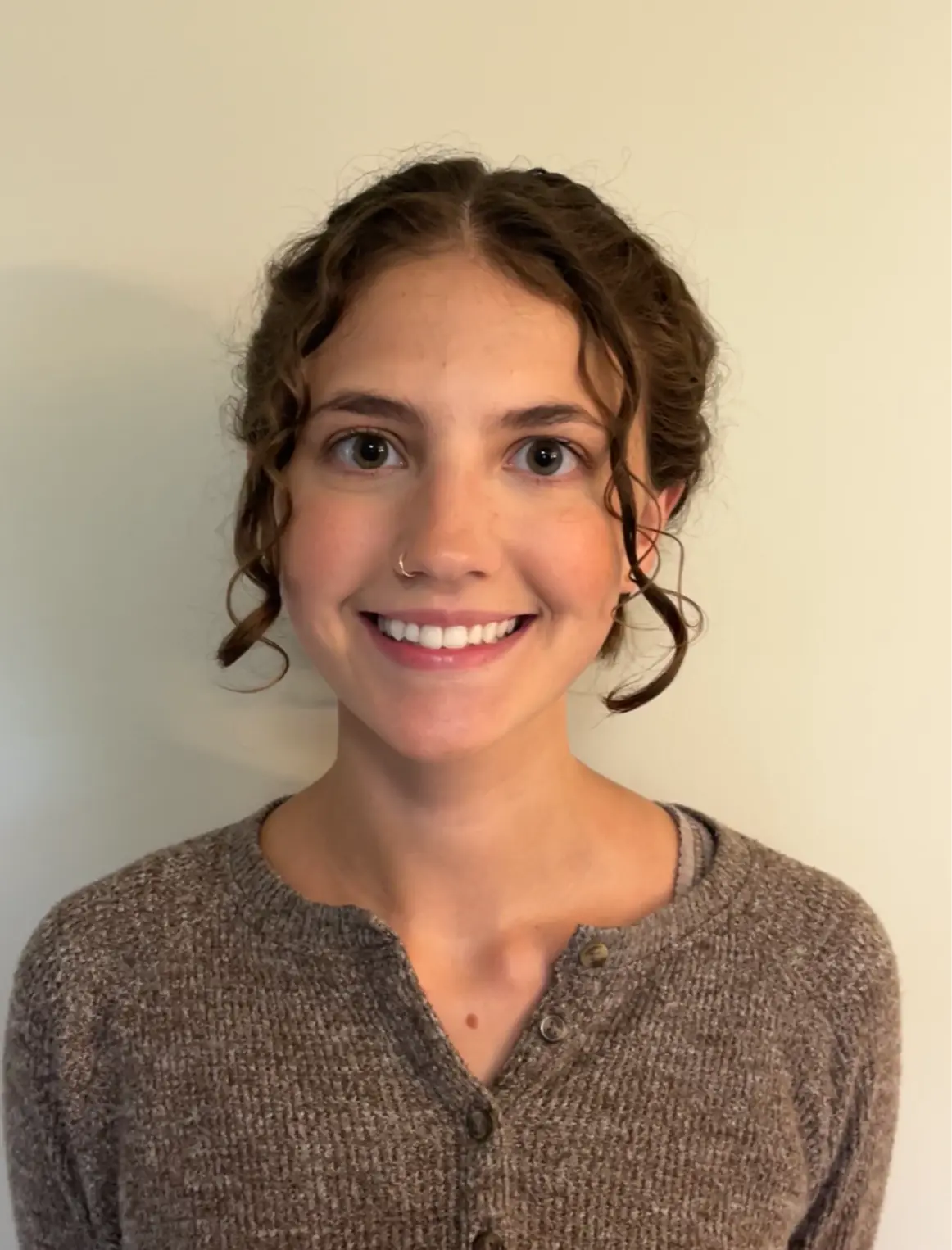
Taylor Maddox
M.A., LSW
Taylor Maddox, LSW, is a Licensed Social Worker who earned her master’s degree from Ohio State University, and her work has been with children and teens throughout her studies and her career. She sees children and teens ages 4–18, working through play, art and storytelling with younger children and CBT, DBT and motivational interviewing with teens. Taylor works under the clinical supervision of Julie Reed, LPCC-S, founder of Reed Counseling.
Book a Free Consultation